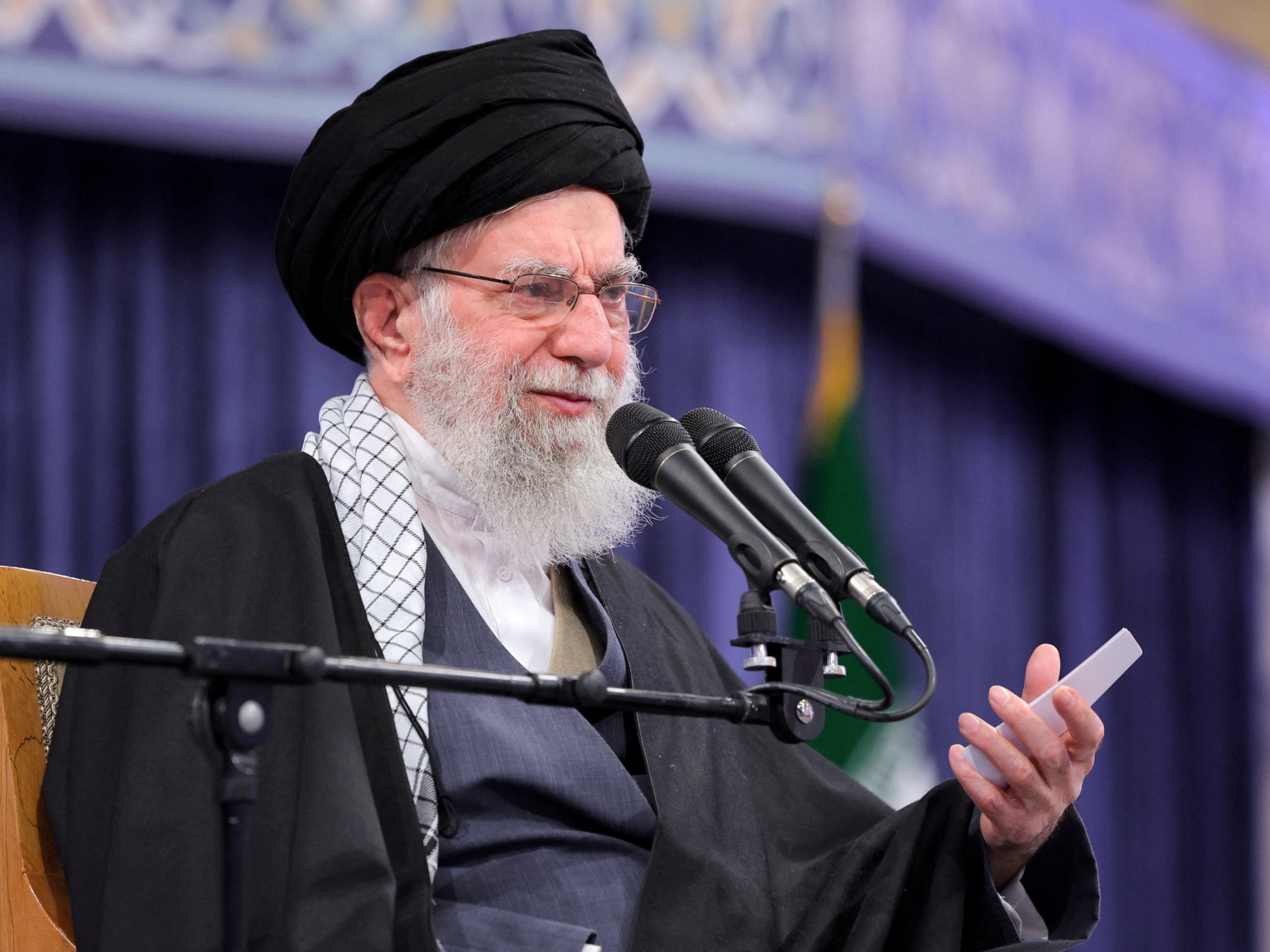
The Middle East has been thrust into an unprecedented state of flux following reports of the death of Iran's Supreme Leader, Ayatollah Ali Khamenei. The announcement, made by former President Donald Trump on Truth Social, heralded a new and dangerous chapter in the region's volatile geopolitical landscape. Trump, who referred to Khamenei as "one of the most evil people in history," confirmed the leader's demise in the wake of significant predawn military operations in Iran, an offensive that saw the United States and Israel acting in concert, and which quickly spiraled into widespread regional retaliation.
The Dawn of a New Era? Khamenei's Demise and US-Israel Operations
The news of Ayatollah Ali Khamenei's death on a Saturday morning sent shockwaves globally. President Trump's declaration on Truth Social underscored the gravity of the moment, painting Khamenei as a historical antagonist. This pivotal event reportedly occurred after major joint combat operations launched by the U.S. and Israel targeted key Iranian assets. U.S. officials indicated that Israel focused its efforts on eliminating Iranian political and military leadership, while American forces aimed to dismantle Iran’s ballistic missile and nuclear programs. These strategic strikes were designed not only to cripple Iran's capabilities but also to exert immense pressure on the existing regime.
In the aftermath of these strikes, President Trump issued a direct appeal to the Iranian populace, urging them to “take over your government.” His message, proclaiming that “the hour of your freedom is at hand,” signaled a clear intent for regime change. However, the human cost of these operations was immediate and tragic. The Iranian Red Crescent reported a devastating toll, with more than 200 people killed and approximately 700 others sustaining injuries, painting a stark picture of the conflict's immediate and severe impact on civilian populations.
Iran's Swift and Widespread Retaliation Across the Middle East
The strikes against Iran did not go unanswered. Tehran's response was swift, decisive, and geographically expansive, triggering a dangerous ripple effect across the Middle East. Iran fired missiles at targets in Israel, as well as at U.S. military bases situated in the United Arab Emirates, Qatar, Kuwait, Bahrain, and Jordan. This coordinated retaliatory wave highlighted Iran's capacity to project power across the region and underscored the immediate threat of a broader conflict.
The Islamic Revolutionary Guard Corps (IRGC), through the semi-official state news agency IRIB, claimed to have targeted 27 U.S. military locations in this retaliatory phase. Furthermore, the IRGC asserted that its forces also struck Israel's Tel Nof airbase, its military headquarters, and a significant defense industry complex in Tel Aviv. These claims, which NBC News has not independently confirmed, suggested a multi-pronged assault using both missiles and drones. The IRGC vowed to continue its "warfare" in response to what it termed the offensive by U.S. and Israeli forces, stating, "The armed forces of the Islamic Republic of Iran will not allow the air raid sirens in the occupied territories and American bases to stop, and will continue to deliver repeated and regret making strikes as a different and very hard step of revenge."
The immediate impact of these retaliatory strikes was felt beyond the direct military targets. In Kuwait, the Health Ministry reported that at least 12 people were injured following regional airstrikes, with casualties suffering minor blunt-force trauma and superficial wounds. Kuwait's Directorate General of Civil Aviation also confirmed that Kuwait International Airport had been targeted by a drone, resulting in injuries to employees. Amidst this escalating violence, Iranian Foreign Minister Abbas Araghchi conveyed a complex message in an exclusive interview with NBC News. While Iran was engaged in widespread retaliation, Araghchi stated that Tehran was interested in de-escalation and willing to talk, provided the U.S. and Israel halted their attacks. He firmly rejected the notion of regime change, describing it as "mission impossible."
Unpacking the Allegations: The "Iran Supreme Leader Plot" and Broader Tensions
Amidst the overt military confrontation and the reported death of the Supreme Leader, another significant narrative continues to unfold—one that delves into the shadowy realm of alleged covert operations and plots. While the term "iran supreme leader plot" might typically evoke scenarios surrounding succession or internal power struggles, recent developments in the United States have brought to light a different kind of "plot" with potential ties to Iranian elements.
A trial currently underway in New York implicates a Pakistani national, Asif Merchant, in an alleged scheme to hire hit men for the assassination of a U.S. politician. Prosecutors introduced compelling evidence, including Merchant's online searches for Trump rally locations and photos of both Donald Trump and then-President Joe Biden on his laptop. What makes this trial particularly relevant in the context of recent escalations is the prosecution's effort to tie the alleged scheme to an Iranian paramilitary group. An FBI agent testified regarding this potential link, suggesting a broader pattern of malign influence or direct action.
Judge Eric Komitee noted the "interesting times" in which this trial is occurring, a sentiment that resonates deeply as the U.S. and Iran engage in open conflict. The implications of such alleged plots extend far beyond a single criminal case, potentially fueling perceptions of a persistent threat from certain Iranian-backed entities operating internationally. This legal battle provides a stark reminder of the multifaceted nature of the conflict, encompassing not just conventional military engagements but also intelligence operations and alleged assassination attempts that underscore the depth of animosity. For more details on this developing story, you can read about the Alleged Iranian Paramilitary Plot Trial Unfolds in the US.
The Geopolitical Fallout and the Path Ahead
The reported death of Iran's Supreme Leader, coupled with the ensuing military engagements and threats of continued retaliation, has plunged the Middle East into an exceptionally precarious state. The immediate geopolitical fallout is profound, risking a full-blown regional war that could draw in numerous international actors. Energy markets are likely to experience extreme volatility, and global diplomatic efforts will be strained to their limits in an attempt to de-escalate the situation.
The explicit calls for regime change from the U.S. leadership, juxtaposed with Iran's stated willingness to talk under specific conditions, create a complex diplomatic tightrope. The ongoing allegations of an iran supreme leader plot or plots against U.S. officials, as highlighted by the Asif Merchant trial, further complicate any potential for de-escalation, adding layers of mistrust and accusations that are difficult to untangle. The unconfirmed claims from the IRGC regarding widespread retaliatory strikes also demonstrate the challenge of discerning verifiable facts from propaganda in a rapidly unfolding conflict.
Looking ahead, the international community faces the daunting task of navigating this crisis. Practical steps would involve robust diplomatic channels, multilateral engagement, and a clear articulation of red lines to prevent miscalculation. The humanitarian implications of sustained conflict are immense, making a swift and peaceful resolution paramount, however distant that may seem currently. The region stands on edge, and the coming days will be critical in determining whether this current escalation leads to wider conflagration or a fragile pathway to de-escalation. For a broader perspective on the current climate, delve into Iran on Edge: From Supreme Leader's Death to US Plot Allegations.
The reported death of Ayatollah Ali Khamenei has undeniably opened a new, highly uncertain chapter for the Middle East. The U.S. and Israeli strikes, coupled with Iran's robust retaliatory measures, have ignited a dangerous cycle of violence that threatens regional stability and global peace. As the immediate aftermath unfolds, complicated by allegations of assassination plots and fervent calls for regime change, the world watches with bated breath, hoping for restraint and a path towards genuine de-escalation rather than a descent into wider conflict.